Sallie, Sam and Dustin have completed the 150-miles across Vermont and now find themselves in Hanover, New Hampshire, home of Dartmouth College. Getting to this point was the fun part even though it rained fifteen of the last eighteen days. The weather has dried considerably and temperatures are in the low 80’s-daytime and upper 50’s-nighttime – not bad considering what the temps have been like back in Mississippi.
Everyone’s gear is holding up well. Sam’s new shoes, Keen Targhee hikers are performing well so far. We’ve still not heard from Keen about their warranty on the other failed shoes. Food, from this point on, becomes somewhat of a worry because re-supply points get farther and farther apart as the wilderness closes in. This means that all three trekkers will have to up their loads slightly to have enough supplies to last until the next town.
The AT covers some 161-miles across New Hampshire. Here the trail is nearly all within the White Mountain National Forest. For northbound thru-hikers, it is the beginning of the main challenges that go beyond enduring distance and time: in New Hampshire and Maine, rough or steep ground are more frequent and alpine conditions are found near summits and along ridges. The trail reaches 17 of the 48 “four-thousand footers” of New Hampshire, including Mount Washington, the highest point of the AT north of Tennessee.
Trail hikers like Sam, Dustin and Sallie, who attempt to complete the entire trail in a single season are called "thru-hikers"; those who traverse the trail during a series of separate trips are known as "section-hikers". Rugged terrain and cold weather during the spring and fall make thru-hiking difficult. Traditionally, only about 10% to 15% of those who make the attempt report to the Appalachian Trail Conservancy that they completed it. As of 2007, the total number of reported thru-hike completions since the 1930’s was 9,583. Completion generally requires five to seven months, although some have done it in three months, and several trail runners have completed the trail in less time. Trail runners typically tackle the AT with automobile support teams, without backpacks, and without camping in the woods. The current unofficial speed record for through-hiking the AT was set by trail runner Andrew Thompson in 2005, at 47 days, 13 hours and 31 minutes.
Thru-hikers are classified into many informal groups. "Purists" are hikers who stick to the official AT trail except for side trips to shelters and camp sites. "Blue Blazers" cut miles from the full route by taking side trails marked by blue blazes. The generally pejorative name "Yellow Blazers," a reference to yellow road stripes, is given to those who hitchhike to move down the trail. There are also those who hike the trail in sections known as "sectioners" as opposed to those who hike the whole trail as one course. Most thru-hikers walk northward from Georgia to Maine, and generally start out in early spring and follow the warm weather as it moves north. These "north-bounders" are also called NOBO (NOrthBOund) or GAME (Georgia(GA)-to-Maine(ME)), while those heading in the opposite direction are termed "south-bounders" (also SOBO or MEGA). Part of hiker subculture includes making colorful entries in logbooks at trail shelters, signed using trail names.
Thanks to numerous “trail angels” the trio has shared the comforts of hot home-cooked meals and real beds several nights across Vermont, a real relief considering all the rain and mud. “Slack packing,” having a trail angel shuttle you up the trail and then hiking back to their place that evening while carrying a reduced load day pack is giving the boys a break from the day to day drudgery of forward hiking.
Sallie has recovered from her Porcupine encounter though Sam’s bank account hasn’t. Perhaps she has learned her lesson by now. At least she’s not had an encounter this week.
Next up for the group will be the White Mountains as the trail crosses a myriad of ridges on its way towards Maine. Elevation changes will be the by-word for the rest of the trail as many of the next peaks are in the 2000-foot range with valleys down to the 400-foot levels. Dustin’s mileage to date is 1725-miles, while Sam and Sallie, having joined up with Dustin in Pennsylvania, have completed 600-miles. They are just 441-miles from Mt. Katahdyn, Maine.
You can find an interactive map at http://www.fivemillionsteps.com/trailmap.php. Sam’s blog is http://sambomc.blogspot.com/search and Dustin’s can be found at http://dustinsthruhike.blogspot.com/. They don’t get to update them often, but when they do, it’s a fairly interesting read. Sam appreciates the many emails he’s been receiving from folks back home. He says “keep ‘em coming” to mclemoresam@yahoo.com. Until next time remember


Subscribe To


 Posts
Comments
Posts
Comments
About Me

AT Map
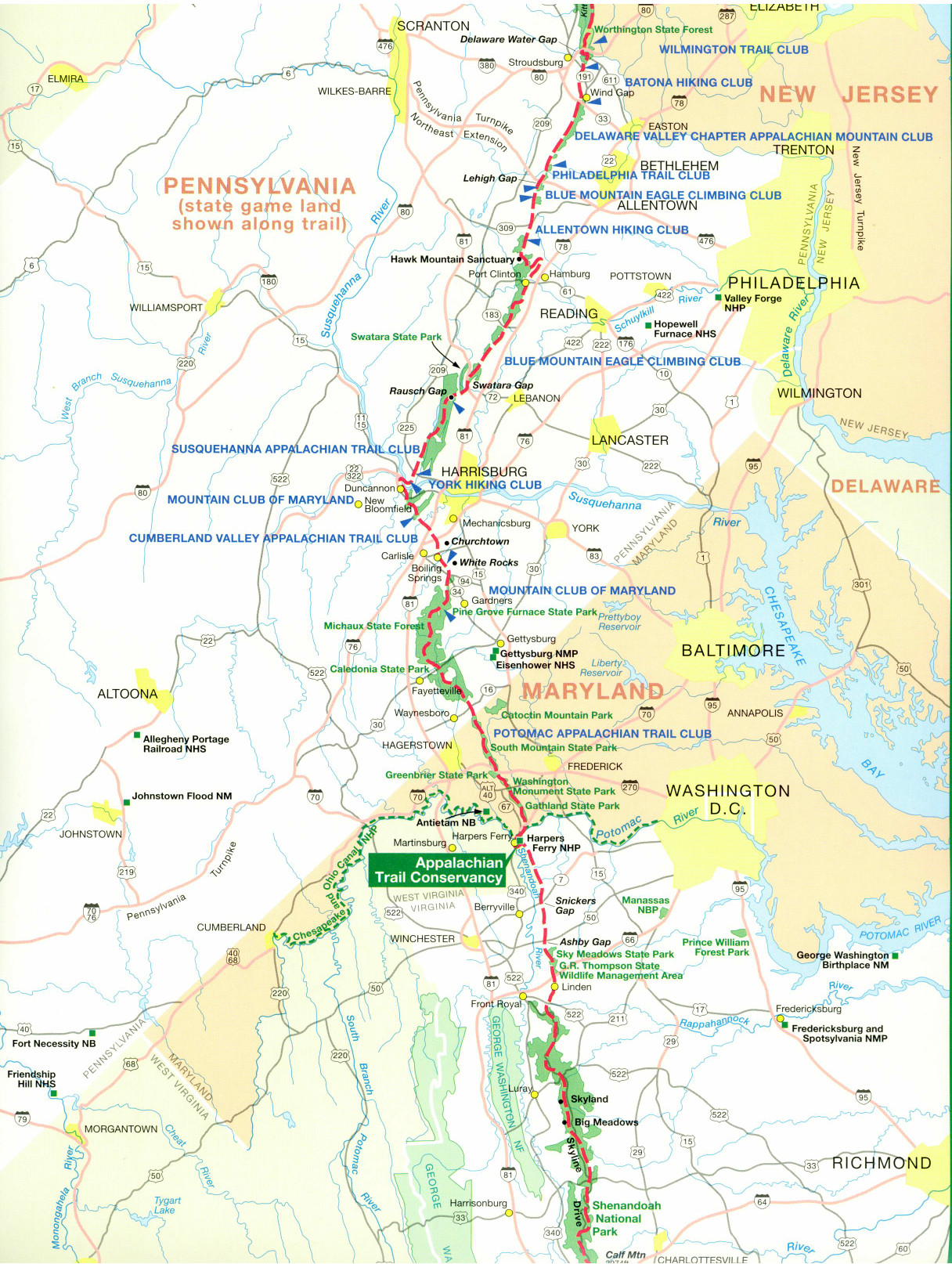
Pennsylvania-Maryland-West Virginia
Mt. Katahdin

The Knife Edge
No comments:
Post a Comment